
How to Reach Amarnath Cave with Route Map?
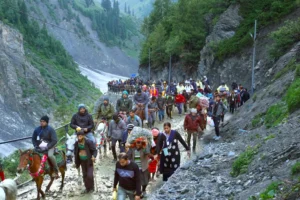
Reaching Amarnath Cave teaches you something important right away. The mountains test your body and your patience before they show you their beauty. Many people look at the map and think the journey looks simple. But the moment you start walking, the real adventure begins.
Two official routes take pilgrims to the holy cave. One starts from Pahalgam. The other starts from Baltal.
Both paths lead you to the same sacred cave, but they feel nothing alike. One route moves slowly and gives your body time to settle. The other finishes faster but pushes your strength hard. Pick your route based on how strong your body feels, not how quickly you want to finish.
Baltal Route – Short, Steep, and Physically Demanding
Baltal → Domali → Barari → Sangam → Holy Cave
This route covers about 14 km one way. That number sounds easy at first. But every step on this path quickly reminds you that short does not mean simple.
The slope stays steep almost the whole way. Your legs feel heavy early. Your breathing speeds up faster than you expect. Even strong walkers stop to rest many times along the way.
Distance breakup:
- Baltal to Domali – around 2 km
- Domali to Barari – around 6 km
- Barari to Sangam – around 4 km
- Sangam to Cave – around 2 km
Authorities do not allow pony rides on this route because the steep path makes it unsafe for animals. So every pilgrim either walks the full distance or takes a dandi (palanquin). This makes the journey much more demanding compared to the other route.
Most pilgrims finish the round trip in one or two days. But those days mean long hours of walking, very little rest, and seriously tired legs by the time evening comes.
People make a big mistake when they think this route feels easy. The cold wind, thin mountain air, and sharp slope work together and drain your energy much sooner than you plan.
This route suits:
- Young pilgrims
- Physically fit travelers
- People used to trekking
It does not suit:
- Senior citizens
- Heart or breathing patients
- Knee or back pain sufferers
- First-time trekkers
Many experienced pilgrims use a smart plan. They walk up through Pahalgam and walk down through Baltal. Coming downhill on this steep slope feels far easier than climbing up it.
Pahalgam Route – Longer, Slower, and Easier on the Body
Pahalgam → Chandanwari → Sheshnag → Panchtarni → Cave
Pilgrims have walked this trail for generations. It stretches longer than the Baltal path, but it treats your body with far more kindness.
First, you ride 16 km by road from Pahalgam to Chandanwari. The trekking begins at Chandanwari.
- Chandanwari to Sheshnag – about 13 km
- Sheshnag to Panchtarni – about 4.6 km
- Panchtarni to Cave – about 6 km
Most pilgrims walk between 36 and 48 km total and spread the journey over 3 to 5 days.
This route feels gentler mostly because of the steady, slow climb. But the support system along the path also helps a lot. Medical camps sit at regular spots. Food stalls keep you fueled. Resting points let you pause. Pony services carry those who need extra help. Wide walking tracks give everyone enough space to move comfortably.
The gradual climb gives your lungs and body time to get used to the high altitude. That adjustment lowers exhaustion and reduces the chance of altitude sickness.
Even with all this support, the journey still challenges you. Long hours of walking, sudden rain, freezing nights, and busy crowds remain part of every pilgrim’s experience on this path.
This route works well for:
- First-time pilgrims
- Senior citizens
- Families
- People who prefer steady pacing
For most pilgrims, this route offers the safer and more comfortable way to reach the cave.
How to Reach Amarnath – Practical Travel Reality
No transport drops you directly at the cave. Every pilgrim first travels to Jammu or Srinagar by their chosen mode. Then road travel takes them to Pahalgam or Baltal. After that, the trek or helicopter ride completes the journey.
Distance from Delhi: roughly 638 km
By Air – Most Comfortable Option
Srinagar Airport serves as the closest airport to the yatra base camps.
From Srinagar:
- Pahalgam sits about 95 km away
- Baltal sits about 71 km away
Flying saves a huge amount of time and keeps your body fresh before the trek starts. Elderly travelers and families benefit the most from choosing this option.
By Train – Budget Friendly, Time Heavy
Jammu Tawi Railway Station works as the nearest railhead.
After reaching Jammu, you continue the rest of the journey by road. Trains cost less, but the combined train and road journey eats up a lot of time and energy. By the time many people reach the base camp, they already feel tired before the trekking even starts.
By Road – Flexible but Exhausting
Buses and taxis run from Delhi and many other cities directly toward Jammu and Srinagar. Road travel can take anywhere from 12 to 30 hours depending on how far you start and what the roads feel like that day.
Long road journeys drain your body significantly. Many pilgrims arrive at the base camp already feeling worn out, which makes the trek ahead even harder.
Coming from Other Major Cities
- Kolkata → Amarnath: around 1804 km
- Mumbai → Amarnath: around 1714 km
- Hyderabad → Amarnath: around 1896 km
Pilgrims traveling from these cities follow the smartest path when they combine options:
Flight or train → Srinagar or Jammu → road → base camp → trek
This approach saves your energy for the trek instead of spending it all on travel.
Things People Rarely Plan For (But Should)
- Sudden rain or snowfall
- Strong cold winds
- Slippery tracks
- Long waiting queues
- Night discomfort at camps
- Breathlessness due to altitude
Every single thing on this list happens regularly on the mountain. None of it surprises experienced pilgrims. Planning for these situations ahead of time makes the whole yatra smoother and safer.
Before you pack your bag, read our complete Do’s and Don’ts for Amarnath Yatra 2026: Complete Guide to make sure you stay safe and prepared on every step of the journey.
Who Should Pause and Reconsider
- People with serious heart problems
- Chronic respiratory illness
- Severe joint issues
- Recent surgery patients
- Very young children
Every person in this group must visit a doctor and get a full medical check before deciding to go. The mountain demands a lot from your body, and knowing your limits protects you.
Simple Ground-Level Advice
- Walk slowly
- Drink water even if you do not feel thirsty
- Rest when your body asks for it
- Start early every morning
- Avoid heavy food during trekking
- Carry only the essentials in your bag
These six habits separate pilgrims who enjoy the journey from those who struggle through it.
Common Questions Pilgrims Actually Ask
1. Which route is better for first-time pilgrims – Baltal or Pahalgam?
Pahalgam works better for first-timers. The slope rises slowly, and your body gets enough time to adjust to the altitude without feeling overwhelmed.
2. How fit do I need to be for the yatra?
If you walk 6 to 8 km comfortably on flat ground, you can handle the yatra. Walking regularly in the weeks before you leave helps your body prepare.
3. Do people face breathing problems during the trek?
Yes, some pilgrims feel breathless, especially at the higher sections of the route. Walking slowly and resting often takes care of most breathing difficulties.
4. Is the Baltal route risky?
The route itself stays safe, but the steep and tiring climb makes it very hard. Only fit and experienced walkers should attempt this path.
5. Can senior citizens do this yatra?
Yes, senior citizens can complete the yatra through the Pahalgam route or by helicopter. Medical clearance from a doctor remains essential before they begin.
6. How many days should I keep for the full journey?
Set aside 4 to 7 days. That time covers travel to the base camp, the trek itself, the darshan, and the return journey comfortably.
7. Is weather a serious issue?
Weather changes fast on the mountain. Rain, cold winds, and sudden temperature drops happen without warning. Keep extra days free in your plan so weather delays do not ruin your schedule.
8. Are medical facilities available on the route?
Government medical camps operate at regular points along both routes. Trained staff stay ready to help pilgrims who feel unwell during the trek.
9. Is network connectivity available during the trek?
Mobile signals disappear quickly once you move beyond the base camps. Download offline maps and inform your family about your daily plan before you lose signal.
10. Should I choose helicopter or trekking?
Choose the helicopter if your health creates concerns or your time runs short. Choose trekking if your body feels strong and you want to experience the full spiritual journey.
Final Advice
Amarnath Yatra fills your heart with devotion, but it also demands real strength from your body. The mountains follow their own rules. They do not slow down or soften themselves for anyone. You have to adjust yourself to match them.
Move slowly, pay attention to what your body tells you, and pick the route that honestly matches your fitness level. When you do that, the journey stops feeling like a test and starts feeling like a true pilgrimage.
For most pilgrims, the gradual and steady Pahalgam route brings far more joy and safety than rushing through the steep and punishing Baltal path.
Check out: How to Register for Amarnath Yatra 2026