The Complete Guide to Adi Kailash [Myths, History & Mythology]
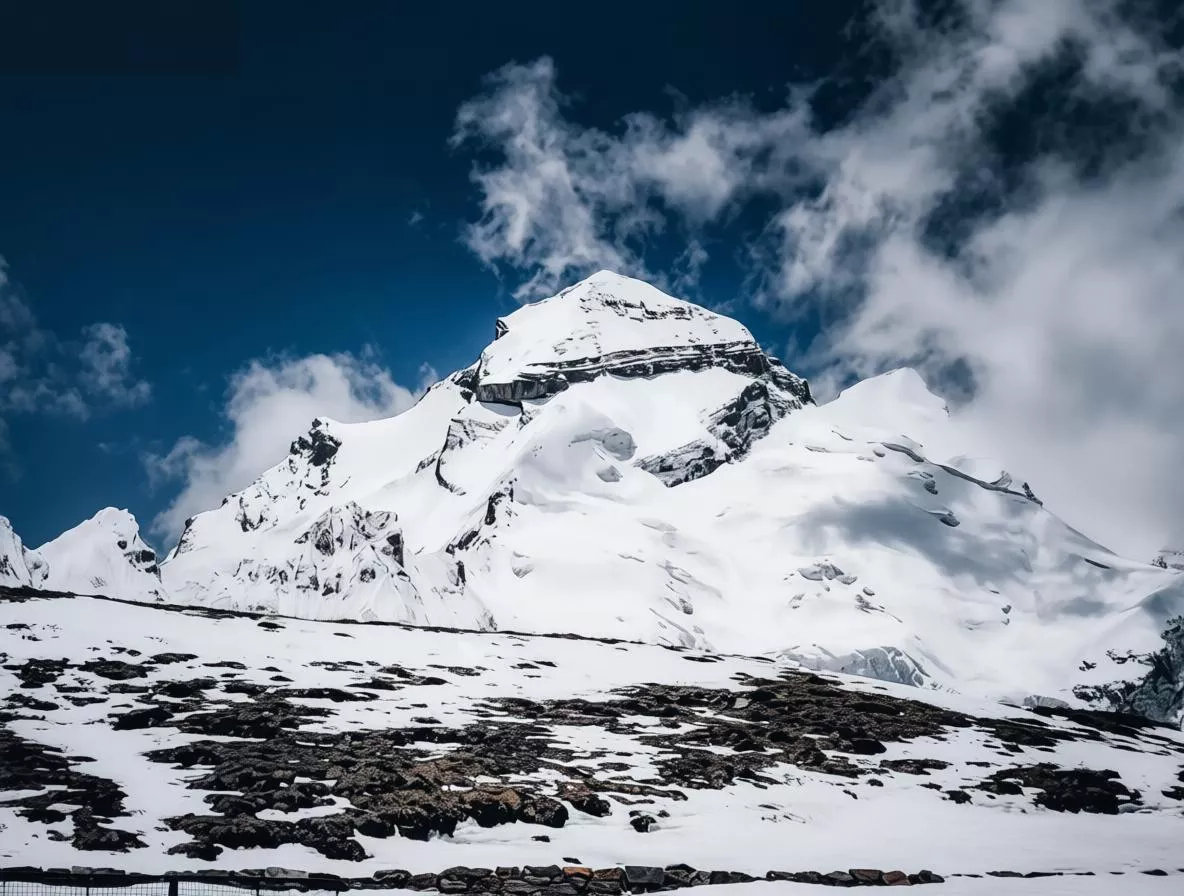
Adi Kailash, people also call it Chhota Kailash, which means “little Kailash.” Mountains in the Himalayan range in the Pithoragarh district of Uttarakhand, India surround this amazing peak. The mountain rises up to 5,945 meters above sea level, making it incredibly high and impressive to see.
Many Hindu people consider Adi Kailash a sacred place and view it as a mirror image of Mount Kailash. The mountain holds a special home for Lord Shiva, his wife Goddess Parvati, and their two children Ganpati and Kartikey. Different from the original Mount Kailash in Tibet, Adi Kailash shows people another version of this holy place.
Hindu tradition ranks Adi Kailash as the second most important among the “Panch Kailash,” which are five magnificent peaks scattered across the Himalayan mountains. These peaks all bear the name “Kailash” because they represent different forms of Lord Shiva. Mount Kailash in Tibet holds the first position, Adi Kailash claims the second place, Shikhar Kailash (also called Shrikhand Mahadev Kailash) takes the third position, Kinnaur Kailash fills the fourth spot, and Manimahesh Kailash rounds out the group in fifth place.
Historical and Mythological Significance
Stories from ancient Hindu religious texts tell many interesting tales about Adi Kailash. These stories and legends connect this mountain to the Hindu gods and goddesses in important ways.
1. The Earthly Home of Lord Shiva
Hindu faith teaches that Lord Shiva, the most powerful god in Hinduism, makes his home at Adi Kailash. Ancient stories say that Lord Shiva sat and thought deeply in meditation at this sacred place for thousands of years. Different religious books describe how Lord Shiva’s presence at Adi Kailash demonstrates his forever connection with Goddess Parvati and shows his powerful divine nature.
2. The Testing of Parvati’s Dedication
According to ancient Hindu tales, the mountain site of Adi Kailash witnessed a special event between two gods. The story tells how Goddess Parvati loved Lord Shiva very much and wanted to marry him. However, Lord Shiva enjoyed his spiritual work so much that he did not want to get married. Instead of agreeing to marry her right away, Lord Shiva gave Parvati many tough challenges to complete.
Parvati worked hard and successfully finished all the difficult tasks that Lord Shiva gave her to do. Her actions and determination impressed Lord Shiva very much. Since Parvati showed such strong love and complete devotion to him through her actions, Lord Shiva decided to marry her. The two gods then lived together happily forever after.
3. The Panch Kailash
“Panch Kailash,” or the “Five Kailashas,” describes a group of five holy mountain peaks that different locations across the Himalayas contain. Each of these mountains people believe represents a different version of Lord Shiva. Adi Kailash serves as one important part of the Panch Kailash group. Together, these five peaks form a special circle of sacred places that devotees visit to connect with Lord Shiva.
The five peaks that make up the Panch Kailash include:
- Kailash Mansarovar
- Adi Kailash
- Shrikhand Mahadev Kailash
- Kinnaur Kailash
- Manimahesh Kailash
4. The Cosmic Dance and Divine Display
Ancient religious stories explain that Lord Shiva performed a special cosmic dance, which people call the Tandava, at the location of Adi Kailash. During this sacred dance, Lord Shiva showed his complete divine form to a wise teacher named Sage Ashtavakra. The Tandava dance represents the energy and power of the universe in movement and shows the strength of creation and change.
The stories, legends, and history connected to Adi Kailash bring great spiritual importance to this mountain. Hindus from all corners of the world travel to Adi Kailash seeking to deepen their faith and feel a strong connection to Lord Shiva. The mountain stands as a symbol of holiness and spirituality, drawing people who wish to improve their souls.
Geographical Significance
Adi Kailash’s position near the border between India and Tibet makes the mountain even more special and important. The peak reaches about 5,945 meters high above sea level, creating an impressive sight from the surrounding areas. People who visit Adi Kailash notice that the mountain seems to change its position under different weather conditions and at different times of the year. This unusual feature draws many pilgrims and travelers to the site because they find it fascinating and mysterious.
The rocky terrain of Adi Kailash presents many challenges to anyone who tries to climb it. Visitors must have strong muscles and high endurance to make the climb safely. Yet the natural scenery all around the mountain fills visitors with feelings of peace and spirituality. The fresh mountain air, the views of distant peaks, and the quiet beauty of the place create an experience of calmness and connection to something greater than ourselves.
Temples and Sacred Sites Located in Adi Kailash
Many temples and holy places occupy the area around Adi Kailash, making it even more beautiful and spiritually important. The different temples and sacred sites that dot the region add to the overall holiness of the location. Let me describe some of the most significant temples and sacred places that devotees visit:
1. Adi Kailash Temple
Pilgrims discover the Adi Kailash Temple at the center of the main pilgrimage route. The local community built this temple to honor Lord Shiva, and it serves as the main place of worship. Thousands of devoted followers who travel on the Adi Kailash Yatra journey visit this important temple. They come seeking spiritual awakening and hoping to receive blessings directly from Lord Shiva. The temple represents the heart of the pilgrimage experience.
2. Gauri Kund (Jolingkong Lake)
A beautiful lake called Gauri Kund, which some people also know as Jolingkong Lake, sits at the bottom of the massive Adi Kailash peak. Along the shores of this water, visitors find a small shrine dedicated to both Goddess Parvati and Lord Shiva. Many pilgrims traveling on the Adi Kailash Yatra stop at Gauri Kund to pray and seek spiritual blessings. The site holds deep meaning for followers hoping to gain inner peace and connection with the divine.
Location: Pilgrims discover Gauri Kund sitting at the base of Adi Kailash, rising to an elevation of 5,608 meters above sea level.
Sacred Stories and Local Legends: Hindu mythology tells an important story about this lake. The name “Gauri Kund” translates to “Lake of Compassion,” taken from the name of Goddess Parvati, who people call Gauri. Old religious writings explain that after fighting a powerful demon called Jalandhar, Parvati jumped into this lake to recover her strength and energy. The clean, pure waters of the lake worked like magic to bring back her power, allowing her to defeat the evil demon. Local people who live in the area tell stories about divine beings who come down from heaven to wash themselves in the sacred water of this lake.
Why This Place Matters: Travelers on the Adi Kailash Yatra consider Gauri Kund an essential stop on their journey. Followers of Hindu faith believe that jumping into the lake helps clean away bad deeds and brings good luck and blessings. The stunning reflection of the huge Adi Kailash peak in the lake water creates one of the most beautiful views in the entire region.
3. Om Parvat
Om Parvat rises as another sacred mountain that sits near Adi Kailash. This special mountain has a unique shape that looks exactly like the holy “Om” symbol, which Hindus find very important. The peak stands 5,590 meters high above sea level. People who follow the Hindu faith and search for spiritual growth visit Om Parvat to feel the divine energy and strengthen their connection with Lord Shiva through prayer and meditation.
According to Hindu beliefs passed down through generations, eight mountains exist that display the Om symbol, but only one mountain so far has explorers discovered. That discovered mountain is Om Parvat, which sits in this region. This special feature makes a visit to Om Parvat an exciting and historically important experience for all travelers who visit the area.
4. Parvati Sarovar
Location: Travelers find Parvati Sarovar approximately 2 kilometers away from the main peak of Adi Kailash, sitting at an elevation of 4,497 meters.
Sacred Meaning and Local Tales: Religious traditions teach that Parvati Sarovar is a smaller version of Mansarovar Lake, which rests near Mount Kailash in Tibet. This connection makes the spiritual importance of Adi Kailash even stronger because it shows how closely the two places relate. Local stories say that Goddess Parvati blessed this lake herself. People believe this blessing gives the lake the power to grant wishes and help people grow spiritually.
Why This Lake Matters: Followers of Hinduism travel to Parvati Sarovar and bathe in the water, trusting that the lake will wash away their sins and mistakes. They believe the experience brings good fortune and happiness into their lives. A small shrine honoring both Shiva and Parvati sits on the shore of the lake, drawing devotees to bow their heads and make offerings. An old temple near Adi Kailash provides pilgrims with another place to pray and ask for divine blessings from the gods.
Pilgrimage and Yatra
The tradition of traveling to Adi Kailash comes from Hindu mythology and religious teachings. People know the Adi Kailash Yatra as a sacred journey in which devoted followers travel to worship, perform religious rituals, and feel the divine energy that fills this special place. The path to Adi Kailash symbolizes never-ending faith and the endless search for spiritual truth that has always been central to Hindu religion and culture.
When Pilgrims Visit?
The best time to visit Adi Kailash Yatra from the middle of May through the middle of October each year. Visitors find the most pleasant weather conditions from mid-May to June and again from September through mid-October. During these months, the temperature stays comfortable and snow blocks fewer paths.
The New Road Makes Travel Easier
Workers recently completed a new motorable road called the Gunji-Lampiya Dhura Pass Road (GLDPR), which has changed the Adi Kailash Yatra experience dramatically. This new road has made traveling to the site much easier and more comfortable for most visitors. The construction of this road has cut down the time travelers spend getting there and reduced the hard physical work. Pilgrims now find it much simpler and quicker to reach their sacred destination.
The new road has shortened the hiking distance to Adi Kailash to just 4 kilometers. From the end of the road, visitors can see a special viewpoint from where they can clearly see Om Parvat in the distance. The road has helped more devotees visit this holy place comfortably, making the Adi Kailash Yatra an attractive choice for followers who want to explore the sacred site.
Main Attractions on the Adi Kailash Yatra
The Adi Kailash Yatra offers pilgrims many important attractions that add meaning and beauty to the spiritual journey:
1. Adi Kailash Parikrama: Travelers make the Adi Kailash Parikrama, which means walking in a circle around the holy mountain, the main activity of the Adi Kailash Yatra. This walk around the sacred peak holds deep religious meaning for followers.
2. Spiritual Pilgrimage: Hindu devotees recognize Adi Kailash as a highly respected pilgrimage destination. Countless followers undertake the Adi Kailash Yatra journey each year to ask for blessings, say prayers, and feel spiritual growth and transformation. People from different backgrounds and beliefs come to this place seeking peace and a deeper relationship with Lord Shiva.
3. Connection to Sacred Stories: The Adi Kailash Yatra connects to many stories and legends from ancient Hindu religious writings. These tales add deeper spiritual and cultural importance to the experience, helping pilgrims feel closer to the gods and understand their faith more completely.
Devotees and seekers who want to reach spiritual understanding travel from many countries to visit Adi Kailash. The site attracts people of all ages and backgrounds who want to deepen their connection with the divine and grow spiritually.
Conclusion
Adi Kailash stands as a symbol of spirituality and represents a place of strong personal faith for Hindus around the world. The mountain’s connection to Lord Shiva, its collection of mythical stories, and the physical challenges it presents make it a popular destination for people searching for a powerful link to the divine. Pilgrims who visit find meaning in the journey, peace in the surroundings, and strength in their beliefs.
Some Interesting Facts
- The water in Jolingkong Lake (Gauri Kund) holds special healing qualities that local people have noticed for many generations.
- During the winter months, Parvati Sarovar freezes completely, turning the entire lake into a beautiful natural ice rink that shimmers and shines.
- Both lakes play important roles in keeping the natural environment healthy and balanced in the surrounding region, supporting plants, animals, and the overall health of the area.
How to Book Package: https://www.shrineyatra.in/adi-kailash-yatra-packages