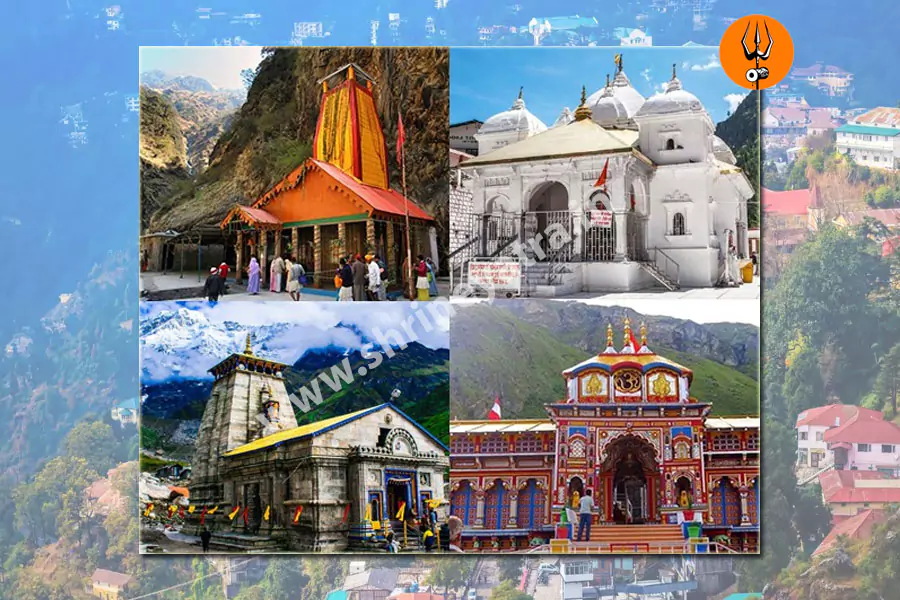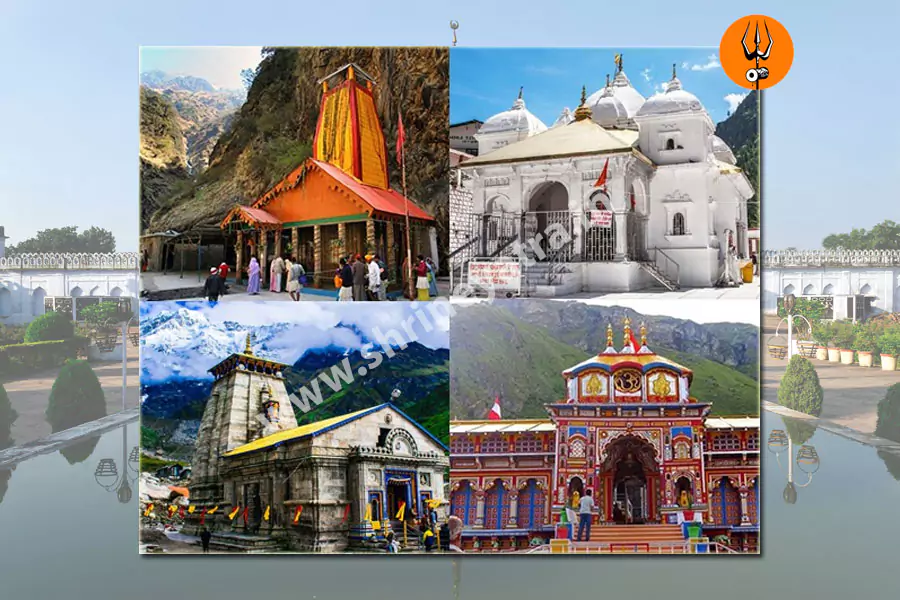
Char Dham Yatra of Uttarakhand
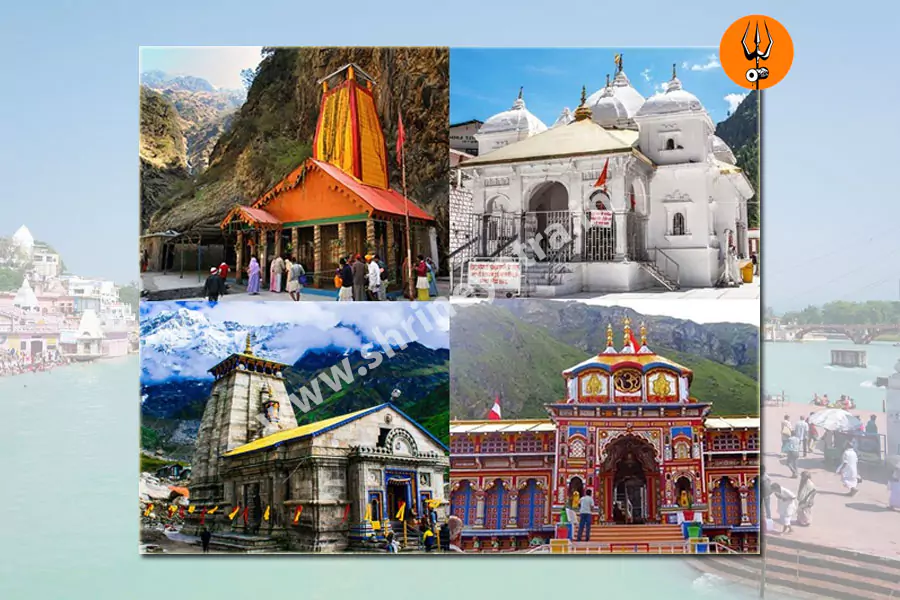
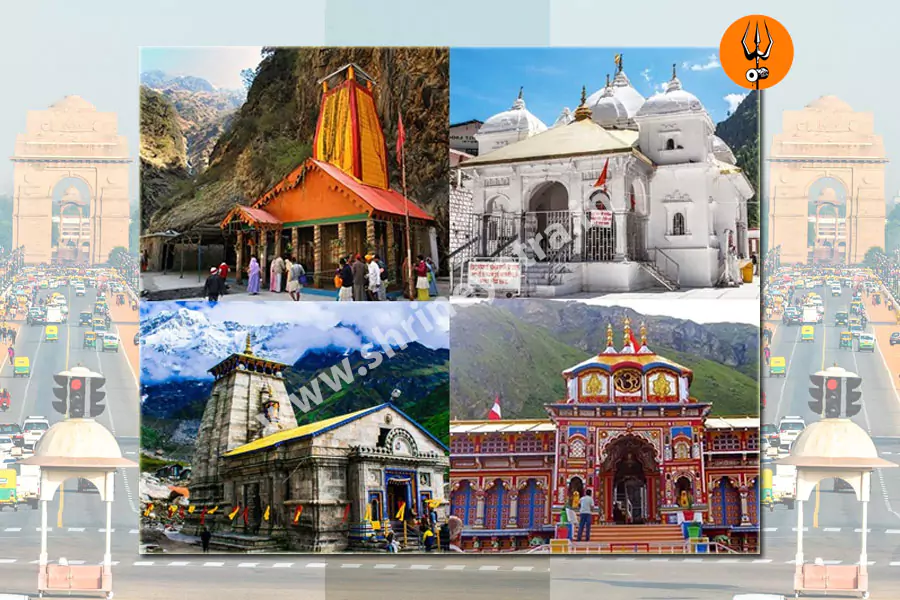
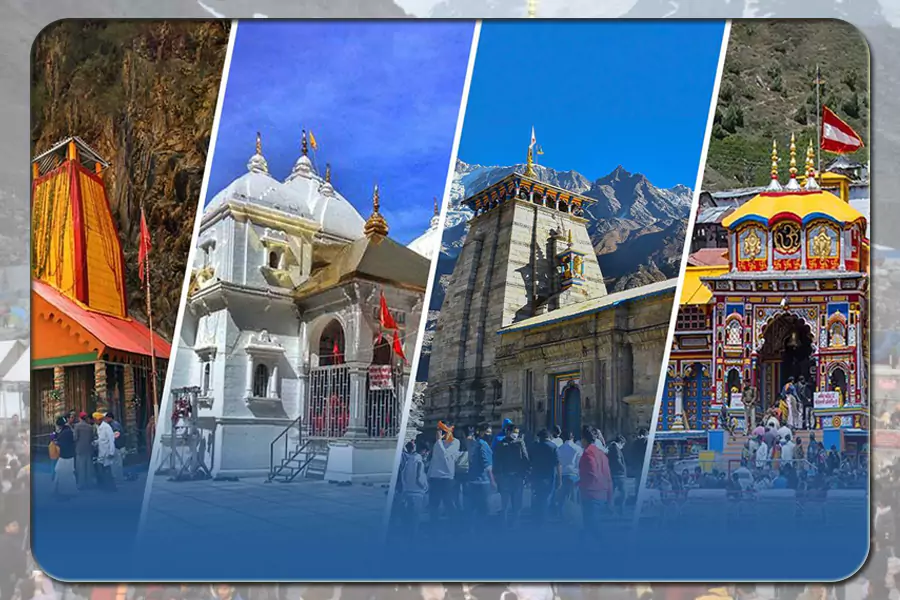
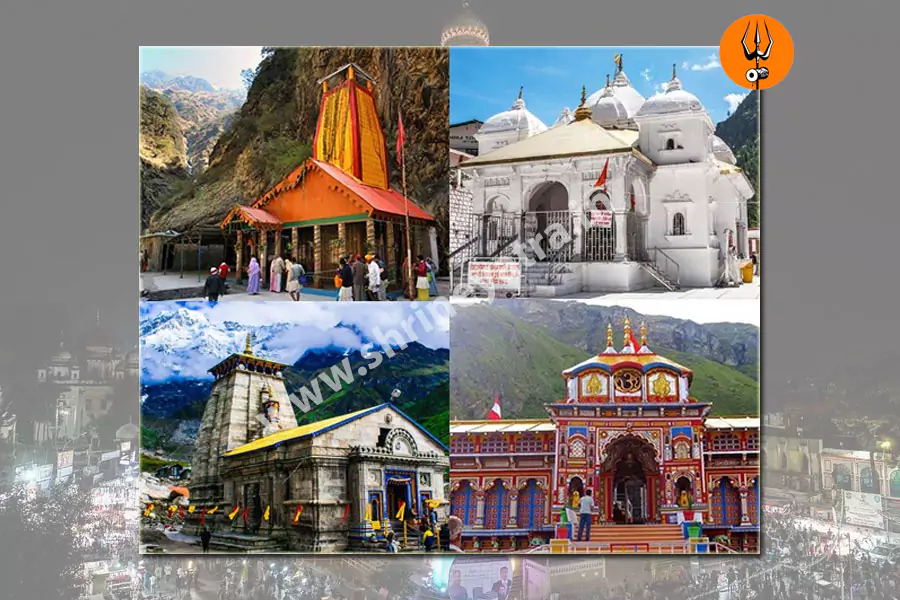
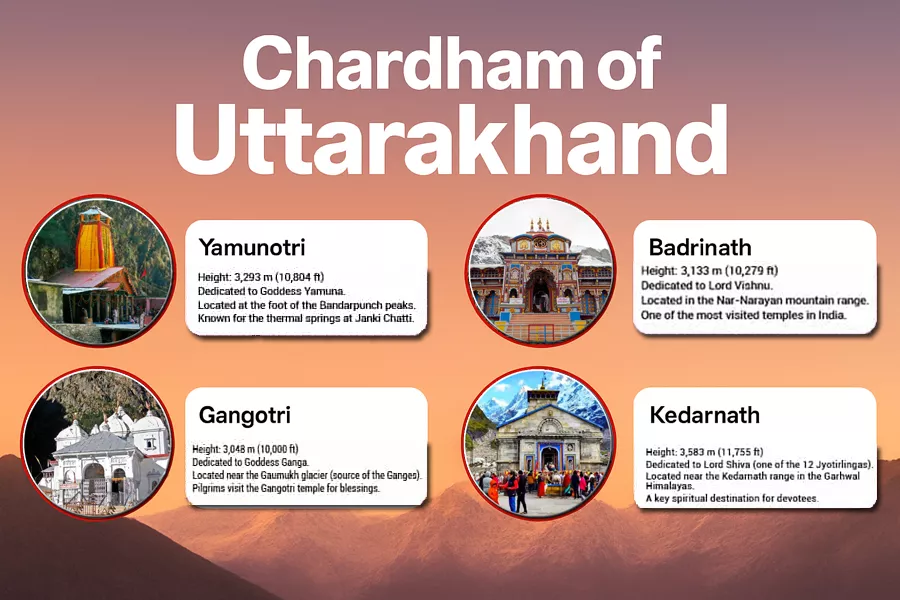
Uttarakhand deserves the name Devabhoomi, which means Land of Gods. This beautiful state holds countless Hindu temples that welcome visitors all year long. The Char Dham Yatra stands out as the most popular pilgrimage route. The word “Char” translates to four in Hindi, while “Dham” means a location sacred to Hindus. Pilgrims follow a circuit connecting four major temples: Yamunotri, Gangotri, Kedarnath, and Badrinath. This journey starts at Yamunotri and traces where the Yamuna River begins. The route continues through Gangotri, where the Ganges River flows down from the mountains. Travelers then visit Kedarnath, home to one of Lord Shiva’s most important temples. The pilgrimage finishes at Badrinath, which honors Lord Vishnu.
The Char Dham Yatra takes pilgrims through more than just religious sites. The journey showcases stunning mountain peaks, thick forests, and flowing rivers. Each location offers spiritual peace and connects visitors to the Himalayan landscape’s natural and sacred beauty. Nevertheless, this expedition presents real difficulties that require careful preparation and planning.
This helpful guide explains the spiritual importance of the Char Dham Yatra. You will discover practical advice for a successful journey and learn how to prepare for an unforgettable experience in this region of remarkable natural beauty.
History, Legends and Significance of Char Dham Yatra
The Char Dham Yatra traces back to the 8th century. Adi Shankaracharya, a respected Hindu philosopher and scholar, created these four temples to bring together different Hindu traditions. Over time, pilgrims began seeing this journey as one of the most spiritually meaningful pilgrimages. The tradition teaches that the journey cleanses sins, purifies the soul, and helps devotees reach Moksha, a state of spiritual freedom.
Each of the four temples holds unique history and religious meaning. Every site carries special stories and significance.
History of Yamunotri Dham

Yamunotri begins the Char Dham circuit as the birthplace of the Yamuna River. Hindu religion honors the Yamuna as the second most sacred river. According to traditional stories, the river goddess Yamuna descends from Surya, the sun god. Worshippers respect her because people believe she brings good health and long life to those who honor her.
Another story connected to Yamunotri involves a wise sage named Asit Muni. This sage bathed in both the Yamuna and Ganga rivers every single day. When he grew very old, he could not travel to Gangotri anymore. A miracle happened when the Ganga River appeared as a small stream next to the Yamuna. This allowed him to continue his daily bathing practice without leaving the area.
The Yamunotri temple sits 3,293 meters high on the Bandarpunch Mountain in Uttarkashi district. Pilgrims must trek six kilometers from Janki Chatti to reach the temple.
History of Gangotri Dham
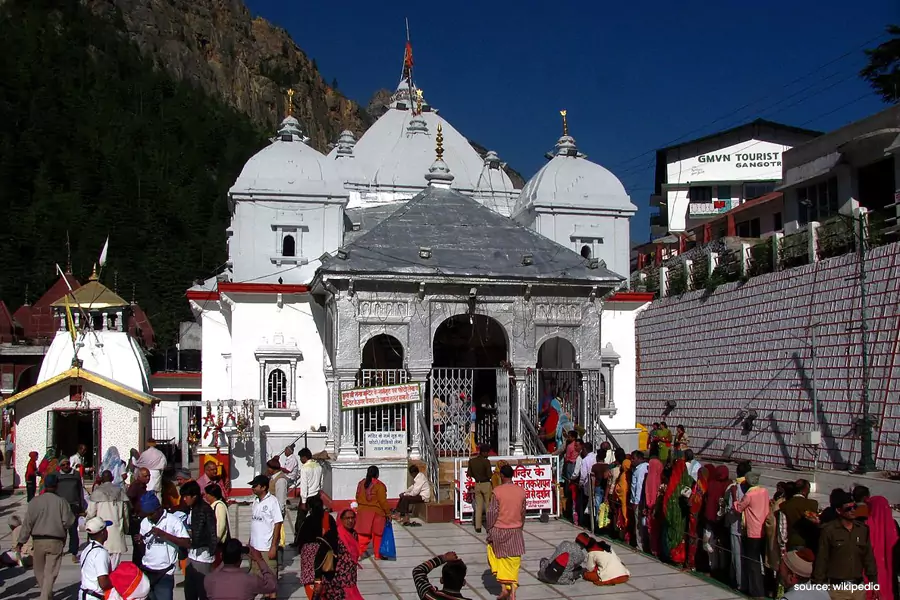
Gangotri occupies the second location in the Char Dham circuit. Pine and deodar trees create a beautiful setting for this temple. Gangotri marks where the most sacred river in Hinduism, the Ganges, begins. Hindu mythology tells that Ganga descended from the sky to earth at this spot. The story says Lord Shiva released the river from his hair after King Bhagiratha prayed intensely to him.
The Gangotri temple stands near the “Bhagirath Shila,” a sacred rock where King Bhagiratha performed his prayers. The actual source of the Ganga River sits 19 kilometers beyond Gangotri at Gaumukh glacier. Visitors must trek to reach this original spring.
Nepalese General Amar Singh Thapa built the Gangotri temple in the early 1700s. The temple sits at 3,100 meters and visitors can drive to reach it easily. No trekking is necessary to visit this location.
History of Kedarnath Dham
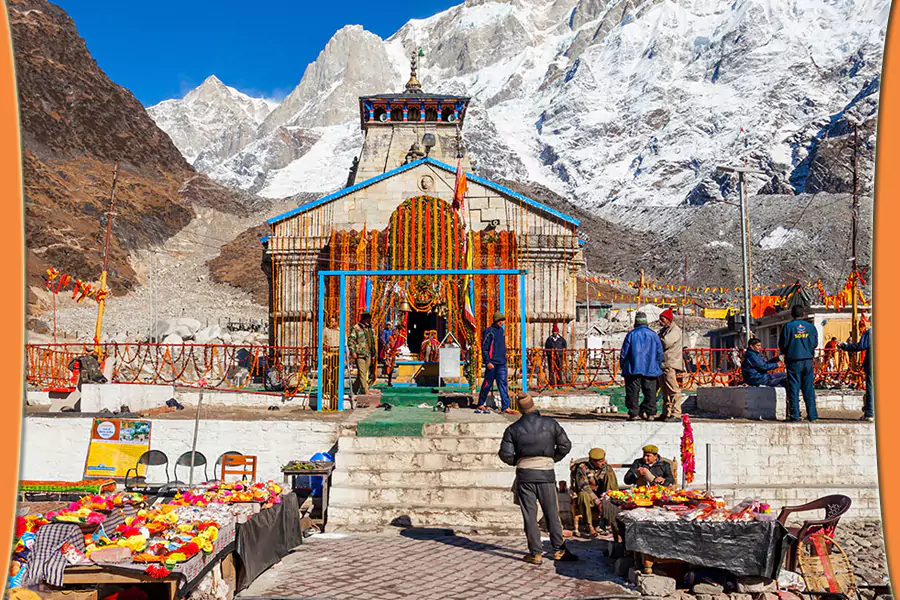
Kedarnath ranks among the holiest places devoted to Lord Shiva. This temple stands as one of the twelve Jyotirlingas and belongs to the Panch Kedar temples group. According to legend, after the great war called Kurukshetra, the Pandava family desired forgiveness from Lord Shiva for their wrongs. Shiva wished to avoid them, so he transformed himself into a bull to hide. He sank into the ground leaving only his hump visible above. This spot marks where the Kedarnath temple now stands.
Although the Pandavas originally built this temple, Adi Shankaracharya blessed and sanctified it during the 8th century. Kedarnath sits 3,584 meters above sea level, making it the most demanding temple to visit among the four Dhams. Visitors must trek sixteen kilometers uphill starting from Gaurikund. The difficult walk rewards travelers with spectacular views of snow-covered peaks and the Mandakini River flowing in front of the temple.
History of Badrinath Dham
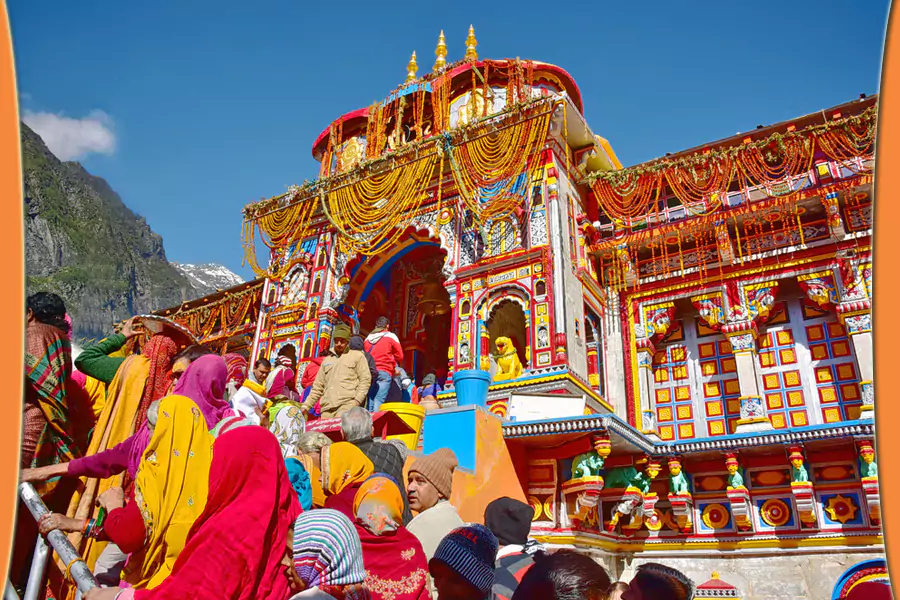
Badrinath concludes the Char Dham Yatra as an especially important worship center for Lord Vishnu followers. This temple honors Lord Vishnu and counts among the 108 Divya Desams across India. These sacred locations mark places where Lord Vishnu appeared in human form.
Old stories describe Vishnu meditating in this sacred valley. Later, the great sage Shankaracharya made this location holy during the 8th century. The name comes from a myth explaining that Goddess Lakshmi, Vishnu’s wife, became a wild berry tree known as Badari. She provided shade while her husband meditated.
Badrinath temple sits in Chamoli district at 3,100 meters elevation. The temple sits on a road that visitors can easily access by vehicle. No trekking is needed to reach this final destination.
Opening and Closing Dates
The Char Dham Yatra welcomes visitors from late April or early May through late October or early November. The temples open on Akshay Tritaya and close on Bhai Dooj. Both dates follow the Hindu religious calendar. The Char Dham Yatra committee announces exact dates every year on Basant Panchami, which falls between January and February. Pilgrims should verify the official dates before beginning their journey.
Suggested to Read:
- Yamunotri Dham Opening and Closing Dates 2026
- Gangotri Dham Opening & Closing Dates 2026
- Kedarnath Opening Closing Dates for 2026
- Badrinath Dham Opening and Closing Dates 2026
Best Time to Visit
The Himalayan region experiences harsh weather during certain months, so only specific seasons work for the Char Dham Yatra. From April or May when the temples open through mid-June, the weather stays pleasant and comfortable. However, many crowds arrive during these opening weeks. If you prefer fewer visitors, wait about a week after the official opening date.
Monsoon rains create dangerous conditions between July and August because landslides and flooding threaten this mountain region. Travel experts recommend avoiding these dangerous months completely.
After mid-September, conditions become pleasant and safe again. September, October, and November offer excellent visiting periods depending on when that year’s Yatra officially closes.
How to Reach
Pilgrims reach the Char Dham sites using airplanes, trains, or vehicles depending on budget and available time. Many travelers combine different transportation methods.
By Air: Jolly Grant Airport in Dehradun serves as the closest airport. Travelers catch taxis from the airport to reach any of the four Dhams.
By Road: People traveling by car can drive from Delhi to Rishikesh or Haridwar. From there, taxis and vans continue to Yamunotri, Gangotri, Kedarnath, or Badrinath.
By Train: Rishikesh and Haridwar have the nearest train stations. Visitors arrange cabs from these stations to reach the four sacred sites.
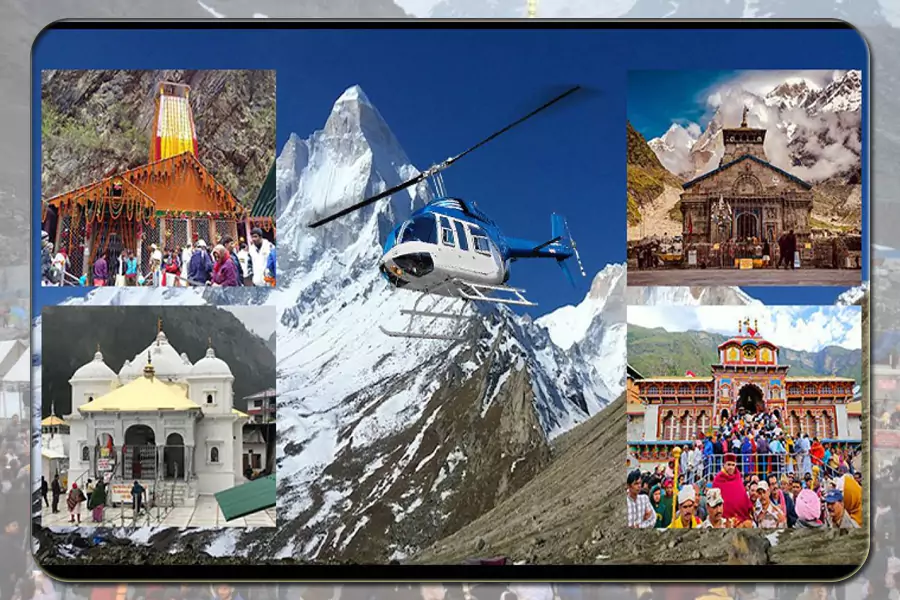
By Helicopter: Pilgrims short on time, dealing with physical limitations, or wanting extra comfort can use helicopter services. Dehradun and Phata have helicopter services, and landing pads exist near each Dham.
Suggested to Read:
Char Dham Yatra Route Map
Most pilgrims start the journey with a vehicle trip from Haridwar to Barkot. The route passes through Dehradun and Mussoorie and takes about six hours. Travelers can stop at Kempty Falls in Mussoorie or Robber’s Cave in Dehradun. Visitors spend the first night in Barkot and leave early the next morning.
On day two, pilgrims travel from Barkot to Jankichatti, covering 45 kilometers. This location marks the beginning of the six-kilometer walk to Yamunotri Dham. After visiting the temple, visitors return to Barkot for another night.
The third day involves traveling from Barkot to Uttarkashi, covering eighty kilometers. The drive takes most of the day. Along the way, travelers stop at Shri Prakateshwar Mahadev Temple. Visitors spend the evening relaxing in Uttarkashi.
On day four, pilgrims leave early for Gangotri Dham. The one-hundred-kilometer journey takes three to four hours without traffic delays. They return to Uttarkashi to sleep.
Day five brings travel to Guptakashi from Uttarkashi, covering two hundred kilometers. This town serves as the base for the Kedarnath trek. On day six, pilgrims go to Gaurikund, the starting point for the Kedarnath temple hike. The steep uphill walk takes six to eight hours plus time for prayer. Travelers rest at Kedarnath overnight.
Day seven brings pilgrims back down to Gaurikund, then to Guptakashi for sleep. On day eight, the journey continues to Badrinath through Chopta. Visitors can stop at Tungnath Temple during this drive.
After praying at Badrinath Dham, travelers drive to Rudraprayag for the final night. The last day brings the trip home to Haridwar, completing the Char Dham Yatra.
Itinerary
Pilgrims can follow this suggested schedule for the Char Dham Yatra:
- Day 1: Travel from Rishikesh or Haridwar to Barkot
- Day 2: Journey from Barkot to Yamunotri and return
- Day 3: Drive from Barkot to Uttarkashi
- Day 4: Travel from Uttarkashi to Gangotri and back
- Day 5: Go from Uttarkashi to Guptkashi
- Day 6: Journey from Guptkashi to Kedarnath
- Day 7: Travel from Kedarnath to Guptkashi
- Day 8: Drive from Guptkashi to Badrinath
- Day 9: Journey from Badrinath to Rudraprayag
- Day 10: Travel from Rudraprayag to Rishikesh or Haridwar
Note: Pilgrims can change this itinerary based on their preference, convenience, and time availability.
Book #ChardhamPackage: https://www.shrineyatra.in/char-dham-packages
Accommodation
Many choices for lodging exist at or near each of the four Char Dham locations. Visitors choose between tents, budget hotels, Dharamshalas, or GMVN guesthouses based on their budget and personal preference. Larger towns including Barkot, Uttarkashi, Sonprayag, and Guptakashi provide more accommodation options for comfortable stays during travel.
Places to Visit on the Char Dham Yatra
Beyond the four main temples, pilgrims discover additional locations worth visiting.
Yamunotri: Surya Kund, Divya Shila, Hanuman Chatti
Gangotri: Gaumukh Glacier, Bhagirath Shila, Pandava Gufa
Kedarnath: Bhairavnath Temple, Chorabari Tal, Vasuki Tal
Badrinath: Mana Village, Tapt Kund, Vasudhara Falls
Travel Tips
- Avoid the opening days right after the Char Dham Yatra officially starts to escape the rush.
- Prepare completely for your trip ahead of time, ideally with a reliable travel agent.
- Reserve all your lodging options in advance.
- Register on the official website at https://registrationandtouristcare.uk.gov.in.
- Pack waterproof clothing and extra warm layers to handle unexpected weather changes.
- Check the weather forecast before your departure.
- Bring first-aid supplies, drinking water, and any needed medicines.
- Begin your travel early each day to avoid traffic congestion.
- Show respect to local traditions and religious practices.
- Keep emergency phone numbers easily available.
FAQs
Q1- Does the Char Dham Yatra stay open throughout the winter season?
The Yatra closes during winter months because snow falls heavily and the mountain terrain becomes extremely dangerous. Wait for summer weather before planning this trip.
Q2- Do pilgrims need to register before visiting the Char Dham Yatra?
All visitors must register through the official website at https://registrationandtouristcare.uk.gov.in before beginning the Char Dham Yatra.
Q3- Can pilgrims find medical care near the Char Dham locations?
Yes, basic medical services, medicine shops, and medical stations operate along the route for visitor safety and comfort.
Q4- What price does a helicopter trip cost from Phata to Kedarnath?
A round-trip helicopter journey from Phata to Kedarnath costs approximately 8,500 Indian rupees per visitor.
Q5- How much does a complete helicopter tour of the Char Dham cost?
Starting from Dehradun, a complete helicopter-based Char Dham Yatra costs around 2 lakh rupees for the round trip.
Q6- What types of lodging does Kedarnath Dham provide?
Kedarnath offers GMVN guesthouses, Dharamshalas, hotels of different price ranges, and tent accommodations.
Q7- Can someone complete the Char Dham Yatra without hiring a travel company?
While travelers can complete the yatra independently, professionals strongly recommend working with a reliable travel agent for a better and smoother experience.
Conclusion
Uttarakhand’s Char Dham Yatra represents an incredible once-in-a-lifetime journey and something everyone seeking spiritual growth in the mountains should experience. The pilgrimage demands effort, and the hikes present real challenges. However, the joy of standing before these four sacred temples while seeing the enormous Himalayan mountains surrounding you creates an experience that no one forgets. The Char Dham Yatra reaches far beyond a simple religious journey. It becomes a path toward connecting with the spiritual power of nature while receiving blessings from the gods.